Plain answers for first-timers
What to expect at your first sound bath, told by someone who has been in the room
If you are about to attend your first sound bath in Mexico and have read three contradictory things online, this is the calm version. What actually happens, in what order, and what you don't need to worry about.
A first sound bath is not what the marketing suggests. The marketing suggests floating, visions, profound release, the sound moving through your cells. Some people experience something close to that; most people experience an hour of lying down, being mildly uncomfortable for the first ten minutes, comfortable for the next twenty, dozing for the rest, and then a strange-but-good feeling on the way home that takes them by surprise.
This is the unspectacular, accurate version of what happens, in the order it happens, so that nothing surprises you for the wrong reasons.
Before you arrive
Most studios in Mexico will email you a confirmation with the address, the start time, what to bring, and a short intake question or two. Read it. If they ask about pregnancy, heart conditions, or recent surgery, answer honestly — it doesn’t disqualify you from much, but it lets the facilitator place you in the room.
The night before, or the morning of: eat a real meal but not a heavy one, drink water across the day, and skip alcohol if you can. Don’t go to a sound bath drunk or hung over. The combination of suppressed reflexes and deep parasympathetic activation produces nausea in some people. If you smoked cannabis earlier and want to come, you can — some facilitators are fine with it, some prefer you weren’t. Ask.
Wear soft, layered clothes. Bring socks even in Mexico City summer. The body cools when it lies still for an hour. Bring a small bottle of water. Leave perfume off — many practitioners and other attendees are scent-sensitive.
Arriving
Most sound baths in Mexico start on time, in the sense that the door closes within five minutes of the listed start. Aim to arrive 15 minutes early for a first session. You will need that time to:
- find the studio (often above a shop, behind a courtyard, up unmarked stairs);
- take off your shoes;
- find your mat or be assigned one;
- ask the one or two questions you have;
- be told, calmly, where the bathroom is and how the room is arranged.
The facilitator will usually greet you personally. If they don’t, that is not a red flag in itself, but a good first session has at least a “hello, anything I should know” exchange. This is the moment to mention anything — pregnancy, panic, “I have never done this and I’m a little nervous”. They will be pleased you said something.
Lying down
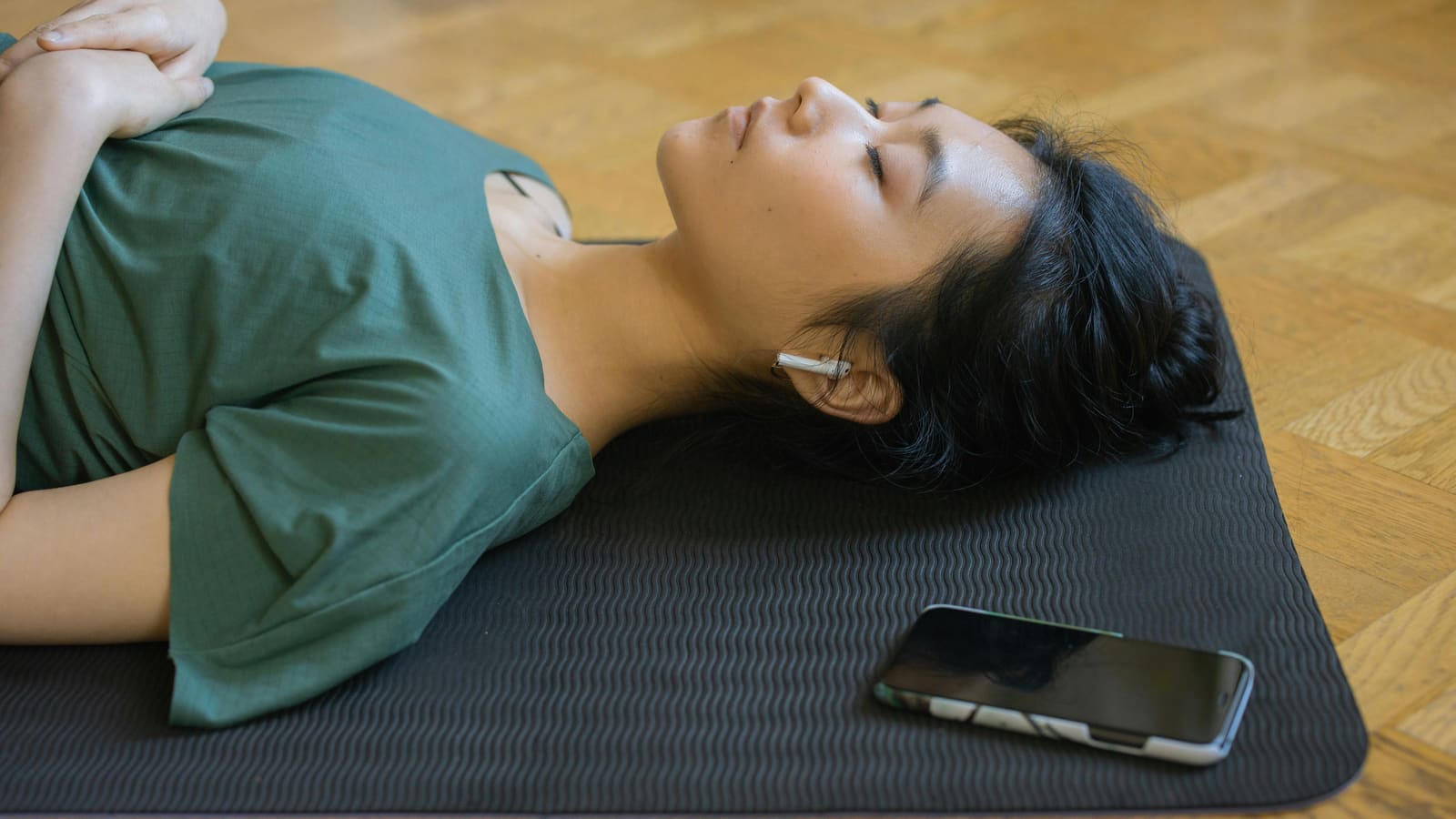
A mat. A bolster under the knees. A blanket. An eye pillow if offered. Lights dimming. The first thing the body usually does, given a flat surface and no demand, is notice every place it has been holding tension. Shoulders, jaw, low back, the place between the eyebrows. This is not the sound bath working yet — it is just what bodies do when they are finally given permission to lie down.
The facilitator will likely say a short opening. Something about breath, something about how to be in the room, often something about consent: you can sit up, you can leave, you can shift, you don’t have to perform stillness. Listen to this. It is not throat-clearing.
Then the lights go further down and the sound begins.
The first ten minutes
This is usually the hardest part. The mind does what minds do: scans for a melody, finds none, tries to make one, fails, becomes mildly irritated, becomes briefly worried about whether you forgot to feed the cat, jumps to a work email, comes back to the room, decides you need to scratch your nose, scratches, returns.
This is normal. It is not a sign you are bad at this. It is a sign your prefrontal cortex is still running the show because that is what it has been doing all day. The body is not yet convinced this is safe in the somatic sense. Stephen Porges’s term for this is neuroception — the body’s pre-conscious safety scan. It takes a few minutes of consistent stillness, sound and held space before the body decides it is allowed to drop down.
You may also notice that the first bowl strikes feel mildly intrusive — what is this, is it always this loud, the gong is going to be terrifying isn’t it. None of those reactions are wrong. They tend to subside by minute ten.
The middle
Somewhere between minute 12 and minute 25, in most people, something settles. The breath gets longer without you doing anything. The skin behind the ears feels warmer. The mind starts to drift sideways instead of forwards. You stop noticing the floor under your hips.
This is the state the practice is pointing at. It feels like the borderlands of sleep — present but not engaged. Some people drop into actual sleep here; some people stay awake but quietly. Either is fine.
The instruments will move. Bowls of different sizes. Sometimes a gong wave that fills the chest cavity with vibration you can feel as physical pressure. Sometimes voice. Sometimes silence between the tones — and the silence is, often, the most interesting part. If you have never noticed the texture of silence inside a held container, this is the moment.
Some things that might happen, all of which are normal:
- Tears. Very common. The autonomic shift unmasks emotion that was being managed all day. No explanation owed.
- Twitching, jolts, micro-shudders. The body discharging held activation. Like the jerks people have just before falling asleep.
- A feeling of weight changing — limbs heavier or lighter than they should be. Sensory recalibration.
- Brief panic. Less common but not rare. If it happens: open your eyes, find the door in your visual field, breathe slowly through the nose. Sit up if you need to. The facilitator will not be offended.
- Nothing. Also possible. Some bodies need a few sessions before they let down. Not failure.
The end
The instruments quiet. The facilitator usually marks the close with bells, a soft “wherever you are, take a few breaths to come back”, or simply silence that lengthens. You are not asked to spring upright. Most rooms allow several minutes of slow return.
When you sit up, the room will feel different. Your voice will sound far away. The light will be more vivid. This is a brief, harmless aftereffect of the parasympathetic shift — the same thing that happens after a deep nap. It usually wears off in 15–30 minutes.
Some studios offer water or tea after. Some let people share briefly; many do not. Don’t feel pressured to explain anything. The most useful thing you can do at this point is be quiet, drink water, and walk slowly. If a friend brought you and wants to debrief intensely in the parking lot, ask them to wait twenty minutes.
Going home
This is the part that surprises most first-timers. You will likely feel, at home that evening, unexpectedly clear — not euphoric, just less crowded. Sleep often comes easier. Some people notice the next morning that one specific holding place (shoulders, jaw) feels different.
The Goldsby observational study and most facilitator experience agree on one specific finding: the effect is larger for first-timers. Subsequent sessions are still useful, but the first one is often the one people remember. This is partly novelty and partly that your nervous system has not yet figured out what to do with this. Both of these are working in your favour the first time.
What to try this week
Book the session. Tell the facilitator it is your first. Show up ten minutes early. Mention anything physical or emotional you’d want them to know. Take a long shower beforehand if you want — many people find it helps the body sense the day is closing. Don’t read anything else about sound baths between now and then. Walk in fresh.
Afterwards, do not plan anything for the next two hours. Walk home. Drink water. Sleep early. The point of a first session is not what you can describe afterwards. It is whether your body, given a clean experience, decides on its own to want another.
FAQ
Quick answers
What if I get there and don't want to do it?
Can I leave in the middle?
Should I tell the facilitator anything before?
Sources
What this is built on
- Facilitator interviews — Encalma (CDMX), Camino del Sonido, Casa OM Mazunte, Medicine Wheel Tulum, 2025–2026. On-site reporting and conversations for SoundHealing.mx.
- Goldsby, T. L., et al. (2017). Effects of singing bowl sound meditation on mood, tension, and well-being. Journal of Evidence-Based Complementary & Alternative Medicine, 22(3), 401–406. doi.org
- Porges, S. W. (2007). The polyvagal perspective. Biological Psychology, 74(2), 116–143. doi.org
Spot something off — a date, a citation, a lineage detail? Write to [email protected] and we will fix it.
Keep reading
How to find a good sound healer — five questions worth asking before you book
There is no licensing body, no certification that means anything universal, no Yelp filter for spiritual practice. Here are the five questions that, asked clearly, sort the working facilitators from the ones still finding themselves.
What to wear to a sound bath — small choices, real comfort
Soft, layered, scent-free, easy to lie in. Socks even when it's warm. The wardrobe matters more than people expect because your body is the instrument the work happens through.
Do healing sounds actually work? — an honest read of the evidence
Yes, for what they plausibly claim: lower tension, anxiety and arousal, mostly short-term, through mechanisms we can name. No, for curing disease or repairing DNA. Here is where the line actually sits.
What are the 5 healing sounds? — the Taoist practice behind the phrase
The 'healing sounds' people search for are the Taoist Liu Zi Jue — and there are properly six, mapped to five organ systems. Here is where they come from, what each one is, and what they actually do.